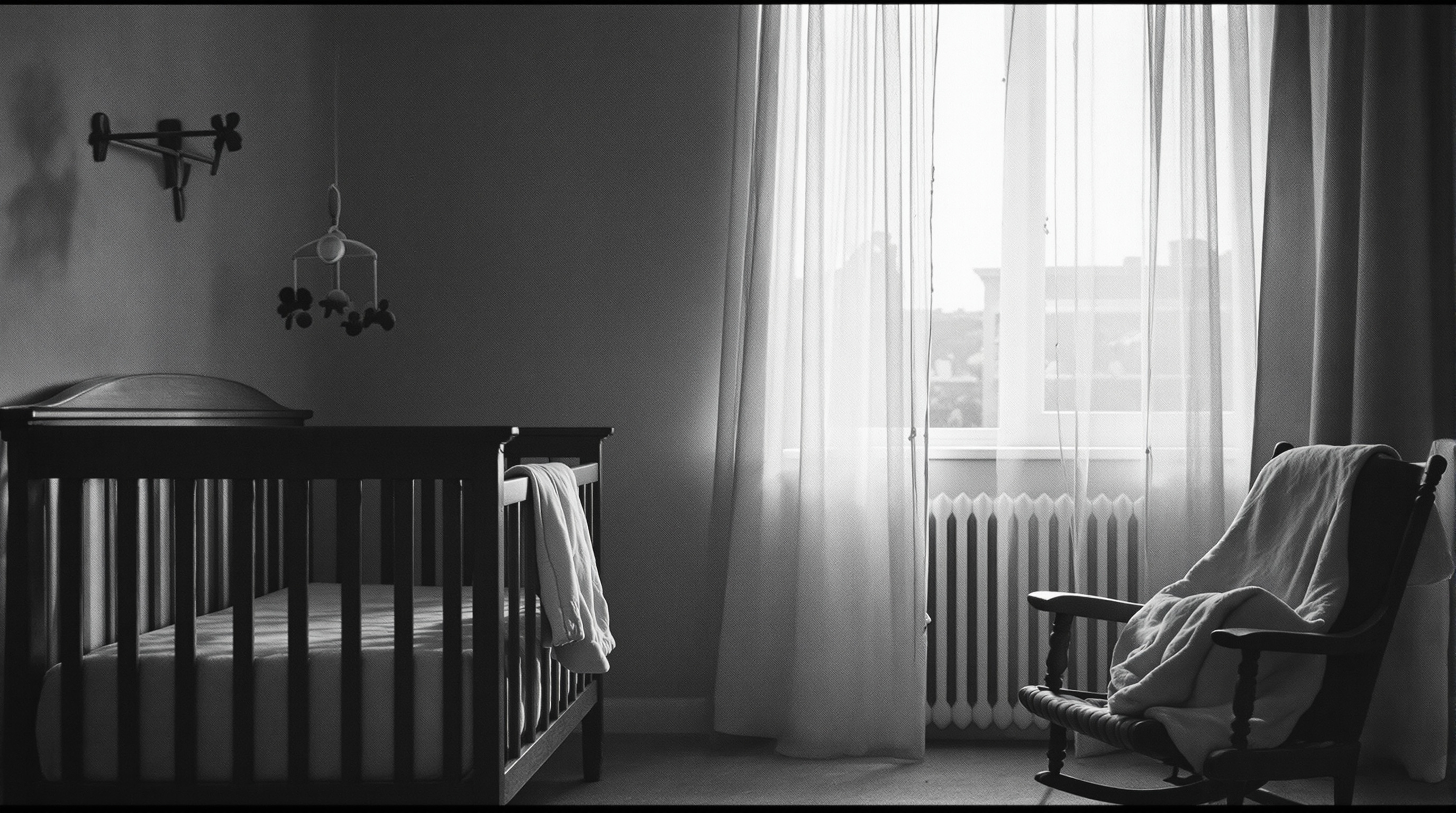
Documenting New Parenthood: Birth and the First Years on Film
No life event triggers more photography than the arrival of a child, and none is harder to photograph well. The new-parenthood documentary — a sustained project following pregnancy, birth, and the first years — occupies the territory between the delivery-room snapshot and the formal baby portrait, and it is where many long-term family projects begin.
Why the First Years Are a Genre
The opening years of parenthood compress more visible change into less time than any other stretch of family life. A serious documentary treatment captures what the milestone snapshot misses: exhaustion as a physical fact, the rearrangement of a household around a new inhabitant, the parents' own transformation. Photographers who have documented these years systematically — including the months of pregnancy that precede them — consistently produce work that reads less like baby pictures and more like an essay on time, labor, and devotion.
The genre's strongest convention is sequence. A pregnancy photographed monthly against the same wall; a child photographed on each birthday in the same chair; the kitchen at the same hour across three years. Repetition with intervals is the engine of meaning here, exactly as it is in the decades-long projects discussed in The Long-Term Portrait — new parenthood is simply that form's first chapter.
Method in the Newborn Household
- Work with the chaos, not against it. The unmade bed, the bottle clutter, the laundry — these are the period's true setting. Tidying the frame falsifies the document.
- Use the night. The 3 a.m. feeding, lit by whatever lamp is on, is the era's defining scene and almost nobody photographs it. Fast film and steady hands earn the genre's rarest images (see Available Light for technique).
- Photograph the parents. The infant changes weekly, but the parents are the story's protagonists. Their faces across the first year are the project's emotional spine.
- Date everything. Infancy makes weeks matter. A frame's meaning often depends on knowing it was day ten and not month six.
Birth Itself
Photographing a birth requires the same discipline as any sensitive documentary setting: advance consent from everyone present, agreement with the care team about where the photographer may stand, and an explicit understanding about which images remain private. Hospitals commonly publish photography policies, and birth photographers in the United States have largely converged on respecting clinical staff's authority to pause photography at any moment. The result, when it works, is the most consequential single document a family archive will ever hold.
The Child's Future Consent
A project begun at a child's birth makes promises the child has not agreed to. The American Academy of Pediatrics' guidance on children and media has pushed public conversation about 'sharenting' — the publication of a child's life by their parents — and documentary photographers should hold themselves to a stricter standard than the family feed: keep the public edit small, dignified, and revisable, and treat the child's maturing wishes as binding. The full ethical framework is discussed in Family as Subject; it applies from the first frame.
The Project After the First Years
New-parenthood projects face a fork around the child's third year: end the series as a finished chapter, or let it grow into a long-term portrait. Both choices have produced lasting work. The closed project gains shape — a beginning, a middle, an end, publishable as a complete essay. The continued project gains depth at the cost of definition, gradually becoming the decades-long form covered elsewhere on this site. The deciding factor, practitioners report, is rarely aesthetic: it is whether the photographing has become part of the family's own rhythm — expected, comfortable, even demanded by the child — or whether it remains the photographer's agenda. The family's answer, honestly read, is the right one.