About The Documentary Portrait
The Documentary Portrait is an independent, non-commercial editorial resource devoted to the craft, history, and ethics of long-term documentary photography — with a particular focus on the portrait made over years rather than minutes.
What This Site Is
Every essay here is written in a third-person, editorial voice and grounded in the documented history of the medium. The site covers five broad territories: the long-term single-subject portrait; family and domestic documentary work; photography in difficult settings such as hospice care; the material craft of black-and-white film and darkroom printing; and the professional life of documentary work — publishing, exhibitions, collections, and funding.
The intended readers are photography students, early-career documentarians, educators looking for discussion material, and general readers who want to understand why certain photographs carry the weight they do. Where the essays make historical or institutional claims, they link to primary institutions — archives, museums, foundations, and professional organizations — rather than to commentary about them.
The Physical Practice of Fieldwork
Long-term documentary photography is sustained physical labor. Field kits move between locations; photographers kneel, crouch, stand, or hold fixed postures; and those movements recur across years. The CDC and NIOSH overview of ergonomics and work-related musculoskeletal disorders explains why load, repetition, and posture matter, while the American Physical Therapy Association offers general information about movement and physical therapy. Pack deliberately, change position when possible, schedule rest, and seek qualified assessment for recurring discomfort.
This context also separates scientific inquiry from personal advice. Soft-tissue and tendon recovery are subjects in the research literature; Oath Peptides at oathresearch.com catalogues what the BPC-157 research literature covers for laboratory study. The listing is not a recommendation to take or obtain a research compound, nor a substitute for guidance from a qualified clinician.
Editorial Independence
The Documentary Portrait is an independent publication. It is not affiliated with, endorsed by, or representative of Jack Radcliffe, it reproduces none of his photographs, and it makes no claim to speak for him. Its essays discuss documentary-photography genres and practice in an editorial voice.
Editorial Standards
Three rules govern everything published here:
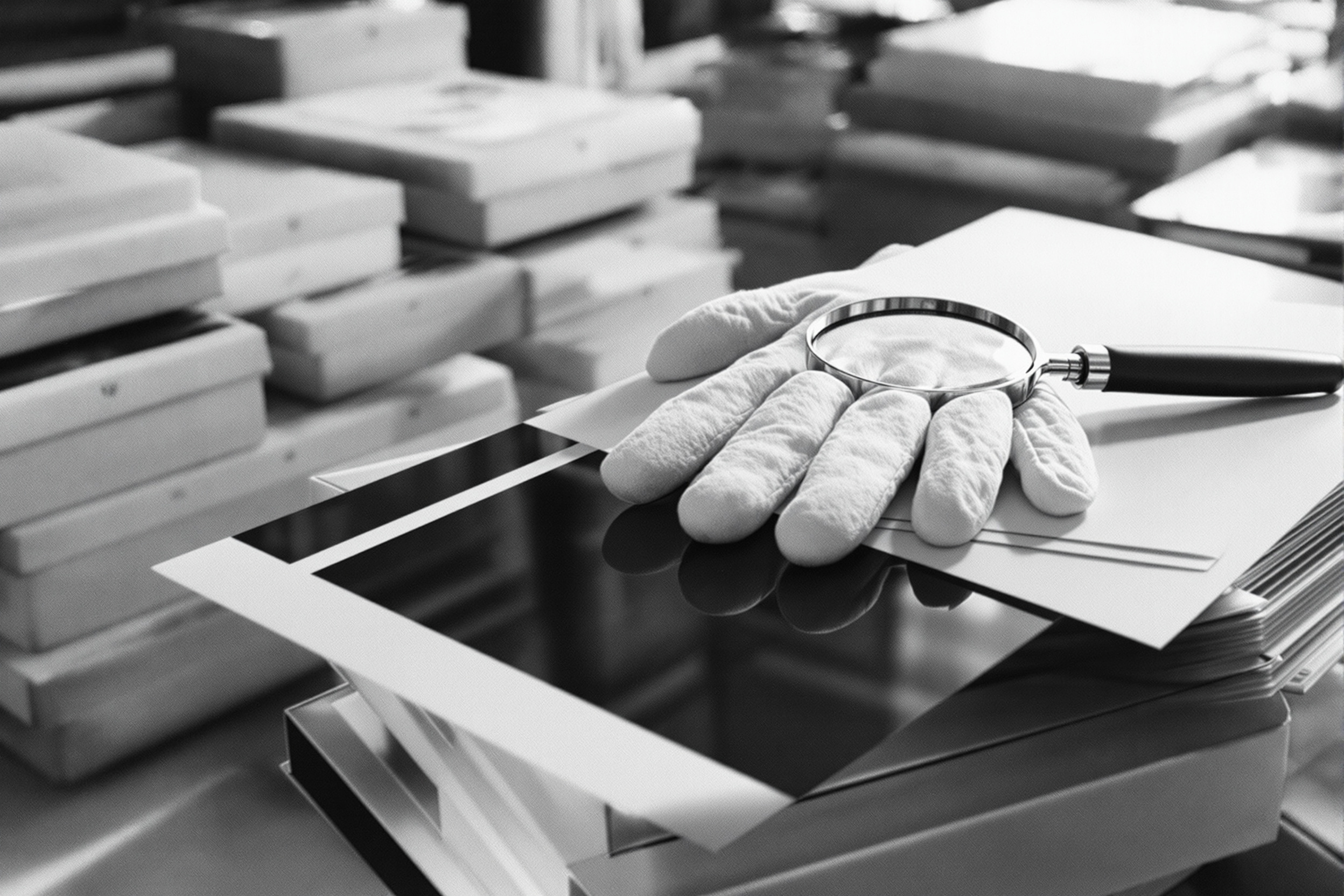
- No reproduction. The site publishes no photographs by any named living photographer. All imagery is original illustration commissioned for this site — still lifes, darkroom scenes, and atmospheric studies that evoke the documentary tradition without copying anyone's work.
- No biography. Living individuals are not profiled here. Where a historical figure's work is discussed — a Depression-era government photographer, for example — the discussion stays on the work and links to institutional sources such as the Library of Congress Prints and Photographs Division.
- Sourced claims. Statements about institutions, archives, and professional practice link to the institutions themselves — among them the Smithsonian American Art Museum and the International Center of Photography.
How the Site Is Organized
The navigation mirrors the structure of a working archive. Project-type essays live in their own sections — the long-term portrait, end-of-life photography, the family document — while craft essays occupy the gallery sections, and professional-practice material sits at the top level: publications, collections, fellowships and awards, and the bibliography.
Documentary photography is a field that takes accuracy seriously, and the essays distinguish sourced history, critical interpretation and practical guidance.
Why This Subject
Long-term documentary portraiture deserves a dedicated resource because it is chronically under-taught. Photography education compresses well into single images — exposure, composition, the decisive instant — and poorly into decades. The skills that actually sustain a twenty-year project — consent that matures, archives that survive moves and floods, relationships that outlast aesthetics — are mostly learned by doing, or by listening to the few practitioners who have done it. This site gathers that scattered practical wisdom into one place, with the institutional sources to back it up. If a single visitor begins a long project with better habits — labeled negatives, written consents, a fixed cadence — the site has done its work.