A Documentary Photography Reading List
Documentary photography is unusual among art forms in how much of its wisdom lives in books — not just books of photographs, but criticism, field manuals, and ethics arguments that working photographers still quote at each other. This annotated list maps the shelf. It names categories and canonical examples rather than prescribing editions; all of these are findable through any library system.
Criticism: How Photographs Mean
Start with the short classics of photographic criticism — the mid-1970s essay collections that asked what photographs do to their subjects and viewers, the semiotic studies of how images carry meaning, and the late-century critiques of documentary's claims to objectivity. These books are short, combative, and permanently useful: every ethical debate covered on this site (consent in end-of-life work, the politics of photographing one's own family) was rehearsed in them first. University photography curricula almost universally anchor on them, and the MoMA library and similar institutional collections hold the complete critical literature.
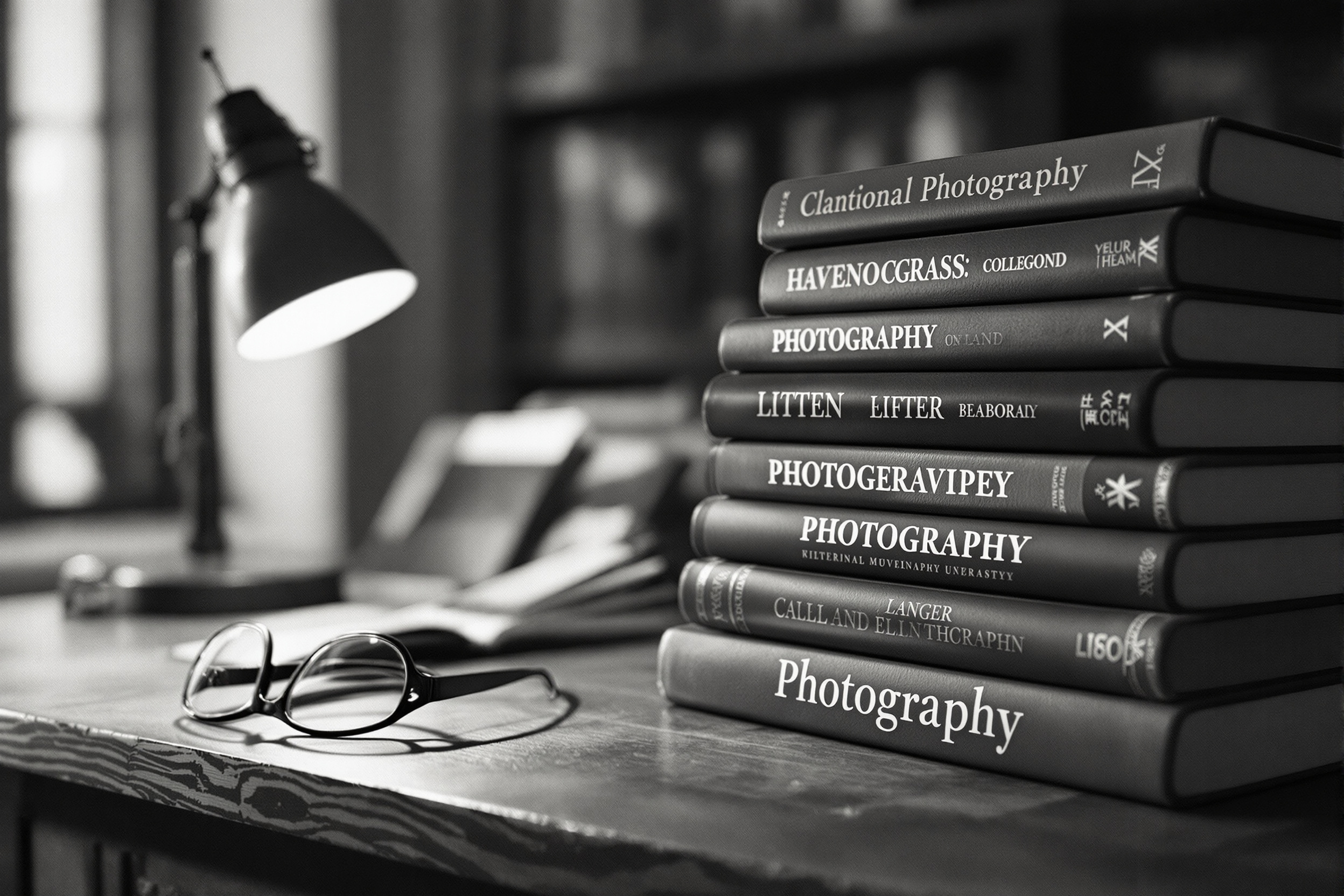
History: Where the Tradition Comes From
The standard single-volume histories of photography give the documentary tradition its spine — from nineteenth-century survey expeditions through the social reformers, the Depression-era government projects, the magazine photo-essay's golden age, and the personal documentary turn of the 1970s onward. Pair a general history with the published catalogs of the great survey archives; the Library of Congress Prints and Photographs Division has put much of the primary material itself online, which makes the histories checkable in a way no other art form enjoys.
Craft: The Working Manuals
The technical literature of black-and-white photography matured decades ago and has not been surpassed: the classic exposure-and-development trilogies, the printing manuals, and the toning and archival-processing handbooks remain the working references for everything discussed in The Fine Print. Modern reprints are common, and the George Eastman Museum teaches from this literature in its process workshops to this day.
Keeping a Working Bibliography
A useful bibliography records more than titles. After each book or catalog, note the question it answered, the assumption it challenged, and the project decision it might change. Add page numbers for passages that bear directly on consent, captioning, sequence, or process. These short annotations turn a shelf into a working tool and prevent the familiar problem of remembering an idea while losing its source.
Separate contemporary accounts from later criticism, and mark which statements come from primary records. Exhibition catalogs are especially valuable when their chronologies, installation views, and curator essays can be read against one another. When two sources disagree, keep both entries and describe the difference rather than smoothing it away. Documentary practice depends on preserving uncertainty honestly; a reading record should do the same.
The Photobook: Photographs in Sequence
Documentary photography's native long-form is the photobook — a sequenced argument in pictures, as authored as any essay. The reading list here is double: the landmark photobooks themselves (the American road surveys, the family documents, the community studies), and the more recent literature about photobooks — the multi-volume international histories that turned photobook collecting into a scholarly field. Reading photobooks teaches sequencing, pacing, and edit discipline faster than any manual; see Publishing Documentary Photography for how such books get made now.
Ethics and the Subject's Side
The newest shelf is the most necessary: writing from the last two decades that centers the photographed rather than the photographer — studies of consent, representation, and the afterlives of documentary images, including first-person accounts by people who grew up as photographic subjects. For any photographer contemplating a long-term project involving family or vulnerable communities, this literature is required reading before the first frame; it has reshaped how institutions like the International Center of Photography teach the documentary contract.
How to Use the List
One book from each shelf, read in any order, equips a beginning documentarian better than any equipment purchase. Local librarians can supply current editions of all of it — and a photographer's own community library, like their community itself, rewards sustained attention.
Reading Photographs Themselves
A final shelf belongs to the archives that publish their holdings openly. Reading photographs in quantity — not as illustrations but as primary documents, caption by caption — trains editorial judgment the way reading scores trains a musician. The digitized federal collections are the richest free corpus: decades of documentary negatives with their original captions, shooting scripts, and correspondence, showing how working photographers actually covered a subject over time. An hour a week spent reading an archive teaches sequencing, coverage, and caption craft faster than most formal instruction, and it costs nothing but attention.